Saturday, August 27, 2011

Poetry Bombs and So Can You! (poem in your post for Aug. 27-28)

Thanks to a fellow book blogger, I'm reminded of how much fun stealth poetry sharing can be.  I've actually done this for Poem In Your Pocket Day: Printed up a bunch of pocket poems and stashed them in shirt pockets in stores, on shelves at the grocery, etc. 

>

This week, I'm going to pop a potent one in some pockets. It's also a poem I've learned by heart, and one of my all-time favorites for contemplation. 

The Gods Are Not Large

But perhaps
the heart
does not want
to be understood.
Your shadow
falls on its pond
and the small fish
hurry away.
They have
their own lives
which they love.

And if to you
it is anger,
bewilderment,
grief,
to them
it is simply life:
their mouths
open and close,
their gills,
they are fed,
they breathe.

The gods
are not large,
outside us.
They are the fish
going on
with their own
concerns.

                     - Jane Hirshfield

What will you do to multiply the bounty?  Which poem will you pop stealthily into pockets?  Let us know in your post (then please link back here to spread the joy), or tell us all about it right here in the comments...


Let's spread the word love, shall we?  Who's it hurting??

MFB,
L

Thursday, August 25, 2011

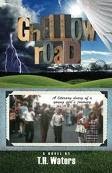
Book Beginnings & Friday 56: Ghellow Road by T.H. Waters (with chickens)

Find out about Ghellow Road here.
Book beginnings:

I was born in the arms of the City of Lakes.  It was not a big city like New York or L.A.; not a city that had yet learned to swallow you whole.

And from page 56:

Home.  I was home at last.  I wasn't sure if I would ever see this place again.  My room was exactly as I had left it, furnished in the gold-gilded bedroom set that Daddy had bought at Sears especially for my 7th birthday.

So we can see how straightforward yet peppered with detail and figurative turns this Minnesota memoir will likely be, from a scant few lines.  I'm looking forward to a Labor Day weekend with Ms. Waters's new 'novel' in hand.

If you're ready to take a peek at more fabulous sentences and perhaps find your next blazing TBR, check out Book Beginnings for more tantalizing openers and at Freda's Voice for the Friday 56 .

Finally, for the Crazy for Books blog hop today, we're asked to offer up a personal little tidbit by responding to the question "Do you have any pets?"


Blackie & Mrs. Dutta.

Why, yes; yes, I do.  My two laying hens (who no longer perform their main utilitarian duties) are currently thriving in their late middle age.  They still make excellent deer-alarms and have lately learned to sing back-up on Neil Young's "Beautiful Bluebird" (harmonica solos bring out their vocal best).  From time to time 'the girls' also see fit to let us know - in no uncertain terms - that the sky is definitely, definitely, definitely falling.  We try to construe this strident hiccup in their otherwise quiet nature as a source of mild amusement.  We hope the neighbors are doing the same.

MFB,
L

Wednesday, August 24, 2011

Helping Teens Stop Violence, Build Community, and Stand for Justice (review)

by Allan Creighton and Paul Kivel.

What it is:  A 200ish page compilation of consciousness-raising activities for teens, focused on the power hierarchies and some of the "isms" political and economic systems in the U.S. might seem to support: adultism, sexism and heterosexism, racism, and able-ism (this last one focused on systemic discrimination against those with 'disabilities'), to name a few.  Also offered: chapters with activities related to Christian hegemony, anti-immigrant oppression, and environmental justice.

What it isn't, that I assumed - from the title - it would be: A practical system for helping teens move from awareness to action.  In fact, there wasn't more than 20 pages' worth of content related to what teens can do to build community (and that's a generous estimate), unless you count whatever community is built naturally among participants in the no-doubt thought-provoking but also emotionally risky activities that form the bulk of the book.  

I do appreciate the opportunities this book provided for sometimes-uncomfortable personal reflection on my role as a part of an educational system that has - in the past and to some degree in the present - tended to reinforce cultural norms.  Heightened awareness of one's cultural framework/worldview, and the degree to which one's personal ethics or morals depart from or coincide with them is - in my view - an outcome worth applauding, and so I suspect that the activities herein could prove enlightening, sometimes surprising, and perhaps even life-changing for teens. 

But here's something else I know: The activities herein - if they're actually to shift individuals' consciousnesses, and then their actions - require students to offer up their emotions and experiences in ways that almost surely would cross some privacy lines not often even tiptoed toward in public school settings.  Perhaps as part of a voluntary after school program, or embedded within one of our existing service or support clubs, one could use these activities, but that would impact only a small number of students, and ones already predisposed - for the most part - toward the aims of the book.   And one might perhaps embed some of the activities in content areas when appropriate for the objectives and outcomes involved.  But that would certainly dilute the impact of the full curriculum offered herein.

On the other hand, for private citizens working with youth and families who are fully aware of the intimate emotional nature of the conversations that may proceed from examining what are sometimes taboo and often uncomfortable societal biases, this book will provide plenty of time-tested activities and general guidance.  If you're looking for activities to facilitate conversations with your own children or if you're an experienced facilitator working with a community group toward peace and justice, this would be a terrific book to read as you begin your liberation journey. 

Finally, and oddly, I found no proof or research offered that this book's twenty-years-tested methods to encourage resistance and alliance (Creighton & Kivel's top two strategies for teens) impact students' future decisions or actions, only implication and hope.  Perhaps I just missed it, or it's provided in the authors' other book, Making the Peace, but I would want to know that I could expect some concrete shifts in at least some participants' actions if I were to take on the emotional, political, and even - given my role as a teacher - professional & economic risks inherent in using these methods.

MFB, with worthy content that just doesn't suit my situation,
L

n.b.
I'm grateful to have received the 20th anniversary edition through Library Thing's early reviewer program.

Tuesday, August 23, 2011

Beautiful (repost of my review for The Memory Palace by Mira Bartok, in honor of its paperback release & blog tour)

The link above offers a "look inside".
Try a taste of Bartok's prose: you'll want more...
Mira Bartok's memoir The Memory Palace is simply that.  Poetic prose meets the fascinatingly sad story of life with her schizophrenic yet brilliant mother, Norma.

The true tale begins when both Mira and her sister Natalia (both of whom changed their names so that their mother could not track them down) return to their eighty-year-old mother's side after decades apart to attend to her as she dies, destitute, of stomach cancer.  From there, we return to Myra's early years and to her own memory palace - that visual-poetic mnemonic first taught by Matteo Ricci in 1596 - moving with her from room to room, and from each traumatic experience to each violent catastrophe in her young life.

But what makes this memoir so much richer than - say - The Glass Castle, with which one might immediately note surface similarities, is art.  And music.  And science.  And musings on memory itself.  And the solace of the natural world, however subtle and quotidian.  Woven into the intense psycho-drama of a family that's clearly been dysfunctional for generations - Mira's grandfather's violent, belligerent outbursts certainly seem father to her mother's psychosis - is an homage to the saving grace of the inquisitive mind, the soul that cannot but open to appreciate the world's day to day wonders.

Illustrations and beautifully apt quotations deepen the resonance of each chapter, and Ms. Bartok's fluid - often luminous - and sensorily detailed prose hold the reader spellbound throughout.  Norma's diary entries are tucked in the interstices between chapters - much as she herself cultivated a habit of tucking pictures behind pictures behind prose in her books and found objects - anchoring Mira's memories with evidence of both her mother's mental illness and her intellectual intensity.  Even when details seem perhaps pedestrian, they offer illumination of Mira's inner world, so allied with each blade of grass, each sparrow she sketches, that one begins to understand their life-saving importance.  This element of 'noticing as salvation', threaded throughout, helps us to see the omnipresence of cause for hope, the possibility of wholeness even in the midst of a particularly horrific childhood.  And Bartok doesn't have to preach: she shows us that life is indeed in the details.

I highly recommend this uniquely rich and gripping memoir to all who love art and science and music and the natural world.  You will find a kindred spirit here, and you will look at the drab details of your own world with renewed wonder, and at those you pass on the street, muttering to themselves, disheveled, ranting, with renewed compassion.

Actions:
1. I am moved to find out what happens now to a child whose mother is mentally ill and whose father is absent.  And what happens to the person struggling with mental illness.  Time for inquiry, in keeping with Mira's questing spirit.
2.  I will draw a while today:  this habit of practice, of noticing saves Mira, who eventually becomes a professional artist, and I will see if it can buoy me too.
3.  I will plan to visit at least three art museums on my upcoming trips.  Mira shares not only a love of music - and a talent for piano - with her mother, but also a deep passion for the visual arts.
4.  I simply must spend some time on Bartok's blog and website: intricately inviting, just as the book is.

Just the Jist List
Title: The Memory Palace
Author: Mira Bartok
Genre(s): memoir
Book's Website: http://thememorypalace.com/#home (a beautiful site, enriched by animated drawings by the author, and offering a snippet of the text as well - once you read her prose, you'll be hooked!)
Author's Website: http://miraslist.blogspot.com/ (a terrific funding resource for writers & artists!)
Year Published: 2011
Pages: 302
When was it read? January 25-26, 2011
Perfect Matches: poets, artists, musicians, naturalists, and anyone interested in the science of memory and mental illness.  Anyone who has been searching for a truly fine memoir.
Perfect Timing: winter birds flitting about in gray trees, a cozy snowed-in or rained-on day, a week of evening hours at your disposal - this is one to savor, not gulp
Perfect NOT: not comfortable with dysfunction, violence, mental illness.  There is plenty of adult content here, but treated with respect
Content Fab Scale (1-5): *****
Why? This is more than mere memoir - It is also an exploration on how the arts and sciences make a chaotic, often terrifying, life worth living.  It's also a study on the vagaries of memory.  A truly rich work.
Action Fab Scale (1-5): *****
Why? Plenty could be researched here, from schizophrenia to the Art Institute of Chicago to Cleveland to head trauma to Bartok to the Vietnam war to ...
# Yellow Stickies: 47
Why? SO much intriguing information, so many thought provoking ideas, and quite a few lovely turns of phrase
Get it:  (again, I'm not an affiliate; just offering an easy way to access this exceptional book)


MFB,
L


Sunday, August 21, 2011

Down Ghellow Road with a Wunderkind, Running Like a Mother.

Or: A particularly propitious haul in this week's mailbox, thanks to the generosity of a promising first-time author and a stand-out publisher (respectively), and to the utter fabulousness of our "little library" branch, featuring a small-but-mighty selection, computer access & free wi-fi for those who couldn't otherwise afford it, and an on-site coffeehouse/bakery to boot. 

Where? On Ghellow Road in Minnesota with literary diarist T.H. Waters.  She's reshaped a challenging childhood into a work of art that I'm eager to read.
 

With? Bulgarian-born award-winning concert-pianist and memoirist, former Buddhist monk, and current Parisian, Nikolai Grozni.  I figure, why not travel with a fascinating Wunderkind?  And why not go back to the future? This title releases on Sept. 6, and I'll be blog-touring it on the 13th.

How?  Run(ning) Like a Mother.
No, I'm not a mother, but I am a budding (translation: way, way beginning) runner.  This new how-to from two veteran outdoor/sports/features writers offers a perfect nightstand read: light-hearted yet practical and particular, promising dreams of a superhero self. 
And this team puts their sneakers where their pens are (??): On their website, they're offering training tips and sponsoring races to get all of us up and running, plus it's a place for conversation and inspiration too, in an understated, not too self-promotional sorta way.

Gotta go run-n-read!

MFB,
L

For more enticing mailbox finds, join the bloggers at Life in the Thumb for Mailbox Monday.

Silver Girl by Elin Hilderbrand: Audiophile Review (briefly)


Get it - and give a free book to kids in need - at
betterworldbooks.

Thumbs up for this consistently engaging summer page-turner.  Sure, it's chick lit., the story of two childhood friends who help each other overcome their midlife challenges, then open to refreshed relationships and reinvigorated prospects.  But it's perfect for summer: set on a beautifully secluded Nantucket beach in an architect's stunning but understated home, plotted around the fall-out from a Bernie-Madoff-esque scandal, and offering us alternating glimpses into the interior lives of both Meredith, the lovely but gullible wife of the Ponzi schemer, and her recently widowed, previously estranged pal Connie. 

As we travel with these two women over twelve hours of well-acted audio, we discover how Meredith's crisis returns them both to a friendship well worth saving, and how the island itself helps heal both women and return them to more than one variety of true love.

It's just what you'd want at a beach on the Vineyard or on a long plane trip or on your bedside table each night: emotions rich and varied enough to keep you turning pages (or popping in CDs), characters dynamic and dimensional enough to feel true, and a story that feels dependable rather than predictable. 

I'd definitely recommend this book for a light but emotionally satisfying summer read, and the audio version made many hot summer car trips fly by.  I hope you'll consider picking up a copy yourself.

MFB,
L

n.b.: My thanks to the folks at Hachette Audio, who provided this audiobook in exchange for my honest review.  I can't wait to see what they put on offer next!

My Actions:  I'm going to spend an afternoon at the beach this week, something I've rarely indulged in these past few years.  Don't know why, exactly, but this book has certainly encouraged me to take advantage of the free, natural healing sand and sun can provide. 

This novel reminded me to keep a sharp eye on my investments; it's time for a financial check-up.

Saturday, August 20, 2011

Poem In Your Post: Carpe Diem

The Latin phrase carpe diem originated in the "Odes," a long series of poems composed by the Roman poet Horace in 65 B.C.E., in which he writes:
Scale back your long hopes

to a short period. While we
speak, time is envious and

is running away from us.
Seize the day, trusting
little in the future.*
The Horace excerpt got me to thinking, searching, as did this past glorious week of light breezes, 70's temps., and plenty of sunshine:

Poetry provides a vehicle for the present moment perhaps better than any other verbal container.  What's your favorite poem that celebrates the here and now, either directly or by serving up imagery that keeps us right smack dab in the moment?  Add it into our comments or pop it in a post and link up here.  Be sure to note this post in your own too so that others can find our hop.


MFB,
L

Here's one of my favorites on this theme... And you don't have to believe in a supreme being to sense the speaker's delight in the present moment...


i thank You God for most this amazing
day:for the leaping greenly spirits of trees
and a blue true dream of sky; and for everything
which is natural which is infinite which is yes

(i who have died am alive again today,
and this is the sun's birthday; this is the birth
day of life and of love and wings: and of the gay
great happening illimitably earth)

how should tasting touching hearing seeing
breathing any--lifted from the no
of all nothing--human merely being
doubt unimaginable You?

(now the ears of my ears awake and
now the eyes of my eyes are opened)
                                        - e.e. cummings

* With gratitude, as usual, to poets.org for a thoughtful discussion of this topic.
Related Posts Plugin for WordPress, Blogger...